
PRODUCT INFORMATION
Ion exchange softening technology
- front page
- product
- Water Treatment Technology
- Technology Development Department
- Ion exchange softening technology
Product Information
- heat treatment
-
water treatment
- Deaerator
- Desulfurizer
- Arsenic remover
- Water softener (calcium and magnesium ion removal)
- Carbon filter (removes odor and residual chlorine)
- Sand filter (removal of suspended impurities)
- Iron remover (removal of iron and manganese ions)
- RO water purifier
- Pre-backwash filter
- UV ultraviolet sterilizer
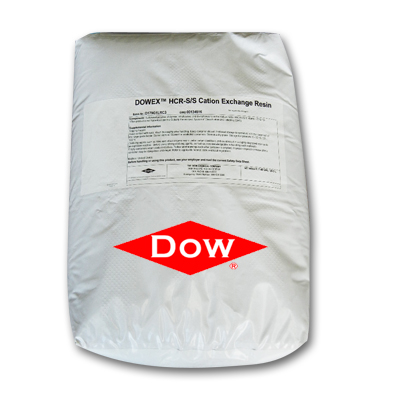
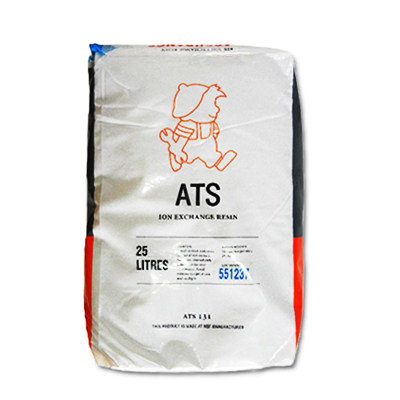
- Ion exchange resin
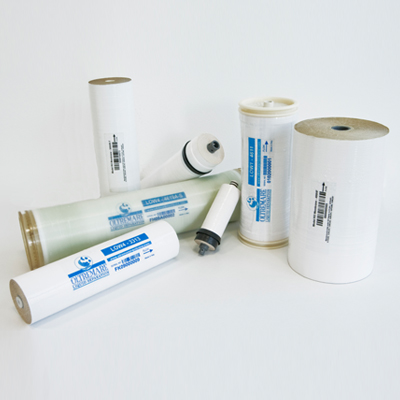
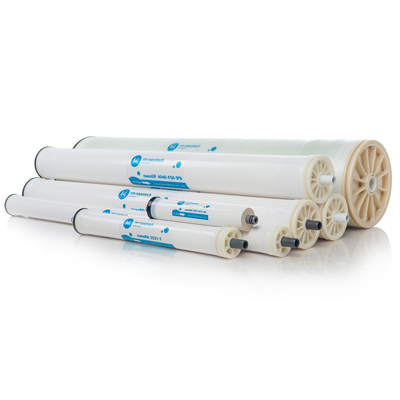
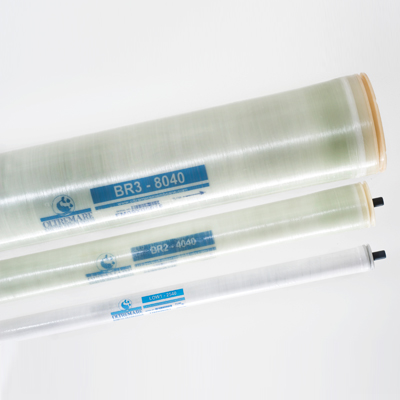
- reverse osmosis membrane tube
- quick filter
- Various tanks for water treatment
- Various application filter media
- 美國 Clack Clark control valve
- 美國 Fleck Control Valve
- 美國 Pentair Control Valve
- 美國 Autotrol Control Valve
- Runxin Control Valve
- Injection treatment
- Technology Development Department
-
brand
- 日本 NIKKISO
- Qin Sen
- 義大利 ATLAS
- 日本 TOHKEMY
- 義大利AQUA
- US DOW
- IDEX USA
- US CLACK
- EMERSON, USA
- American PENTAIR
- SIEMENS Germany
- American PULSAFEEDER
- Denmark DANFOSS
- Thailand HAYCARB
- France SUNTEC
- UK PUROLITE
- Japanese NOP
- Japan OLYMPIA
- Japan KATSURA
- BRAHMA, Italy
- SAGINOMIYA
- HONEYWELL
- AZBIL (YAMATAKE)
- OLTREMARE
- NIPCON
- TROCHOID
- domestic
- EGO
- KATO
- LECIP
- Taiwan ATS
- JACOBI
- ETATRON
- WAVE CYBER
- BOSCHINI
- NIPPON
- WL
- CASH ACME
- YAZAKI
- RUNXIN
- About | Contact
Ion exchange softening technology
Technical explanation
How long is the backwash time of the water softener?
Backwash time should be at least 5 minutes. Generally, the standard setting of the backwash time at the factory is 10 minutes. However, if the water supply is not clear, the backwash time can be set up to 20 minutes.
How long is the salt filling and positive flushing time of the softener?
It depends on the salt dose selected for this water softener. The standard factory setting is 60 minutes.
How long is the forward flushing time of the water softener?
A positive flush usually takes at least 10 minutes.
How long does it take for the water softener to make up the brine?
This should be adjusted most efficiently according to the total amount of ion exchange resin in the water softener. Small water softeners should take at least 4 minutes to make up the brine.
What is the total regeneration time of the water softener?
The total regeneration time is usually between 1.5 and 2 hours.
Since calcium has a higher molecular weight than sodium, should I install a water softener in front of the RO system to supply softened water?
When the hard water is removed by the filter membrane, the calcium and magnesium in the hard water are easily precipitated on the surface of the filter membrane and become scale. For the filter membrane, if the water softening equipment is used to remove the hardness of the water to supply hard and soft water, the life of the filter membrane can be extended.
How often should I replace the ion exchange resin in my water softener?
The life of the ion exchange resin depends on the pretreatment equipment installed in front of the water softener. Regularly use the "soft water test solution" to test the quality of the soft water produced. If the test solution shows blue, it means the soft water quality is good, if the test solution shows purple, it means the soft water quality is not good. Replace the ion exchange resin to maintain proper soft water quality.
How to dispose of (throw away) old ion exchange resin?
Ion exchange resin is a non-hazardous product that you can throw away in your regular trash.
I have a brine bucket, how much salt do I need to add, and how often?
The brine bucket should be filled with salt to just above the water level. The brine bucket fills automatically, so there is no need to add additional water. Check the brine bucket regularly and add salt as needed to maintain proper salt levels.
How to use ion exchange resin:
1.) Regularly sample the resin to identify potential organic fouling (bacterial contamination) problems.
2.) Regularly replace the activated carbon pre-filtering equipment.
Frequently asked questions about ion exchange resin equipment design:
• DI equipment is often designed to be too large, and it needs to be checked and calculated according to the standard, and then the most suitable size is designed according to the data.
• The optimal flow rate of ion exchange resin is 6-10 Gal./Min./Ft2
• The optimal flow rate for polishing ion exchange resin is 20 Gal./Min./Ft2
• The frequency of resin regeneration is recommended at least once a week to control bacterial growth
• For the recirculation loop of the DI system, the recommended flow rate is 5 Gal./Min./Ft2. But it is recommended to use UV ultraviolet sterilization
• The minimum design regeneration expansion ratio of the twin bed DI system is 50%, and the best design regeneration expansion ratio of the mixed bed DI system is 100%
Mistakes in resin handling:
Some common operational errors leading to poor water quality, depletion of capacity, or both possible causes are described below:
1.) Bad backwash:
The function of backwashing is to remove impurities remaining in the exchanger during filtration and to expand the bed to facilitate regeneration. The rate of backwashing is too low to remove impurities from the resin bed, which may lead to the diversion of the resin bed. The exchange capacity will be reduced, and if the backwash rate is too high, the resin will be lost. If the flow rate of backwash is controlled at the inlet, the dissolved gas in the water will be released and attached to the resin particles with the pressure drop, causing the particles to flow out of the exchanger with the backwash, so the flow rate of backwash should be controlled at the outlet. place for it. Attention should be paid to the temperature difference of the backwashing water, because the temperature changes the viscosity of the water, and the difference in viscosity should be compensated by adjusting the backwashing flow rate to avoid insufficient backwashing or loss of resin. (For more details, please call or email)
2.) Defective control valve (leakage):
The leakage of the control valve for controlling the regenerant or the multi-directional control valve for separating the water to be treated and the treated water is sufficient to affect the quality of the treated water.
3.) Insufficient regeneration dose (saturated saline solution):
If the concentration of the regenerant and the contact time of the resin deviate from the preset operating conditions, the exchange capacity may be reduced. The failure of the measuring instrument or excessive dilution may lead to deviations in the concentration or dosage of the regenerant. Take the regeneration effluent for the specific gravity test. It is usually possible to verify that the regeneration dose is correct.
4.) Inappropriate traffic:
If the feed flow exceeds the set value, the function of the ion exchange resin cannot be fully exerted, and the quality of the treated water will be reduced accordingly, especially for weak acid or weak base ion resins.
5.) Blockage of upper and lower filters:
The blockage of the upper and lower filter screens can cause uneven distribution of the water to be treated in the ion exchange bed and the formation of isolation bags, resulting in reduced contact between the water to be treated and the resin and thus lower quality.
6.) Suspended substances in the water to be treated:
Due to the filtering function of the ion exchange resin, the suspended substances in the water to be treated can be filtered out, and the fouling of the resin may cause diversion, which will lead to premature collapse and reduce the exchange capacity. For this problem, the water to be treated can be filtered first or the operation can be shortened. Circulate and remove the fouling with a backwash.
7.) Contaminated regenerant (salt solution):
Contaminated regenerant (salt liquor) can cause fouling of the resin bed and cause diversion. Such as: heavy metal (iron) contamination of salt and saturated salt solution is the best example.
When the resin is transported, the particles must contain water to a wet state. However, excessive humidity will cause water leakage and water accumulation, which indirectly reduces resin preservation. It should be stored in a cool place and packed in plastic bags or placed in glass bottles to keep just the right amount of moisture. Particle freezing will not cause damage but repeated freezing and thawing should be avoided.
Dried resin particles may shrink and slide easily, but they will expand immediately when exposed to water, which may cause cracks. Dry particles can be pretreated with saturated saline, and then diluted to remove salt, but this method cannot completely avoid particles because Cracks caused by expansion. Particles treated with saline, such as non-sodium ion resins, should be regenerated with an appropriate regenerant. If the resin particles are accidentally leaked, they should be removed carefully, because the small particles of resin are very easy to roll like bearing steel balls, and if they are not stepped on, it is easy to cause accidental wrestling.
Resin instability problem:
Ion exchange resin handling problems caused by resin instability are usually caused by the following factors: resin capacity, physical quality, density, or loss of reaction kinetics.
A) Loss of resin capacity:
The capacity loss of the resin usually results in a loss of ion exchange capacity, but has little effect on the treated water quality.
B) Quality loss of physical properties:
The rupture of resin particles will often cause the pressure drop of the exchange tower. If the particles are broken into too small particles, they may be lost during backwashing, resulting in a decrease in resin capacity, but it will not cause a decrease in the quality of the treated water.
C) Loss of resin density:
The effect of resin density loss is similar to resin cracking, and resin can be lost during backwashing.
D) Loss of reaction kinetics:
The loss of reaction power will cause the ions in the water to be treated to "slide" through the resin, leading to a decline in the quality of the treated water. If the quality of the treated water does not exceed the final flow quality of the resin, the capacity of the resin will not decrease significantly, but the loss of reaction power is too large. When it is huge, it will cause a reduction in capacity.
工商業所應用的人工合成離子交換樹脂,其化學性與物理性之衰退抵抗力應為主要之考慮因素。樹脂稱患之費用需加以降低以達到最高經濟效益之運作。通常樹脂之壽命以循環次數或操作年限來計算,有時候則以每年操作容量的損失百分比來表示。樹脂的損失其應用與樹脂種類而異,水軟化處理的樹脂損失率通常為每年1%左右。長達15年的連續操作而不作樹脂更換之情形並不常見。在大多數除離子之運作中,陽離子交換樹脂的操作損失率介於每年5%至25%間。影響樹脂穩定性的六大因素分別為: A) 溫度,B) 氧化,C) 阻塞,D) 滲透震動,E) 機械磨損,F) 輻射。
A) Temperature:
Most manufacturers will recommend the maximum operating temperature of the ion exchanger, the maximum operating temperature of the salt cation exchange resin is between 120 and 150C and the acid cation resin is lower. The maximum operating temperature of the alkali (OH) type anion exchange resin is between 30C and 60C, while the salt type anion resin is higher. However, these maximum operating temperatures are only for reference, so the operating conditions limited to temperatures higher than 100 C do not mean that the resin will be unstable, and vice versa. The thermal decay of the resin is proportional to the temperature and operating time. Operating at the highest operating temperature does not necessarily mean that the resin will decline. Furthermore, if a short shutdown is allowed in the process to replace the resin, what's the problem with the long-term over-temperature operation?
B) Oxidation:
Ion exchange resins tend to shorten their life in strong oxidizing environments. Hydrogen peroxide, nitric acid, butyric acid and chloric acid may cause the resin to decline. Dissolved oxygen in water usually does not affect the function of the resin, but if it coexists with heavy metals, it may accelerate the resin loss (stability) under high temperature conditions, especially for anion resins. serious. Cationic resins are more stable than anionic resins. When chemical agents attack cationic resins, it will cause damage to the resin connection, increase the hygroscopicity of the resin and reduce the volume capacity of the resin. When the strong base anion resin is attacked, its polymerized part will be destroyed. However, trimethylamine can be broken or the fourth amine group can be transformed into the third amine group, resulting in the loss of the function of the resin. If the conversion rate reaches 25% or more, the drop in operating capacity (Salt Splitting Capacity) can be observed. Weak base resins with only the third amino group are more stable than strong base resins, but if the base resin is oxidized, it may turn into a weak acid resin. In this case, the resin tends to absorb sodium, so it needs to be washed with plenty of water after regeneration .
C) Blocking:
Irreversible adsorption and precipitation can cause the decline of resin function. Especially the anion exchange resin adsorbs high molecular weight organic acids, which can often cause clogging. The experience of clothing deionization treatment tells us that we should avoid clogging instead of solving this problem. Choosing the right resin can reduce clogging problems and reduce operating costs.
D) Osmotic vibration:
高濃度與低濃度的電解液的交替處理由於樹脂之收縮與膨脹所造成之滲透震動可導致樹脂的破裂,長期之交替運作將使樹脂粒徑因破裂變小而造成壓力上升(流速降低)及樹脂之損失。此困擾可在高濃度與低濃度的電解液處理之間以介質淡化滲透震動現象如以下列之順序進行之: 4% NaOH – 水 – 8% H2SO4 – 水。粒徑小的樹脂粒子通常較粒徑大的樹脂更具滲透震動抵抗性,尤其粒徑小於0.6mm 者更為明顯。
E) Instrument wear:
The physical stability of the resin particles is good, and they are rarely worn in normal operation, unless they are affected by external factors such as wear when changing the container, but the resin may be broken under high flow rate and the resin bed is too deep. Resin with smaller particle size is easy to wear.
F) Radiation:
Cationic resins used in such treatments usually have sufficient stability, and radiation can affect the bonding of resins. Generally, anionic resins are less stable to radiation than cationic resins, but they are also suitable for treatment under radiation conditions.




 繁體中文
繁體中文  English
  日本語
日本語