
PRODUCT INFORMATION
Understand what "yellow, red, and black water" represent in a table?
- front page
- product
- Water Treatment Technology
- Technology Development Department
- Understand what "yellow, red, and black water" represent in a table?
Product Information
- heat treatment
-
water treatment
- Arsenic remover
- Desulfurizer
- Deaerator
- Water softener (calcium and magnesium ion removal)
- Carbon filter (removes odor and residual chlorine)
- Sand filter (removal of suspended impurities)
- Iron remover (removal of iron and manganese ions)
- RO water purifier
- Pre-backwash filter
- UV ultraviolet sterilizer
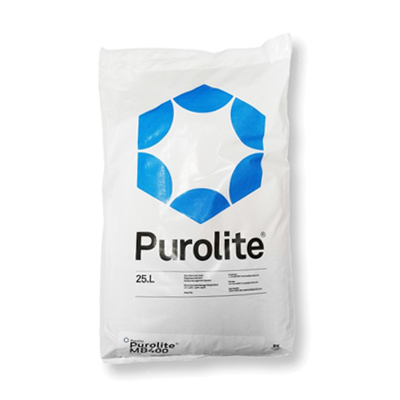
- Ion exchange resin
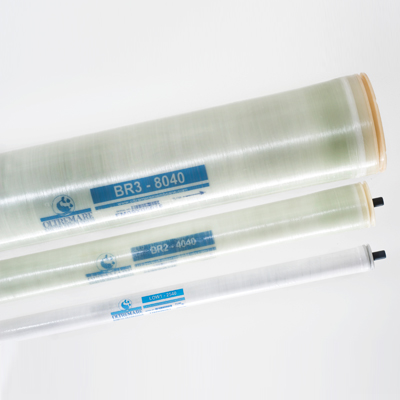
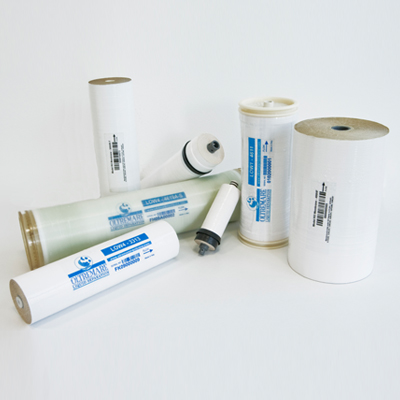
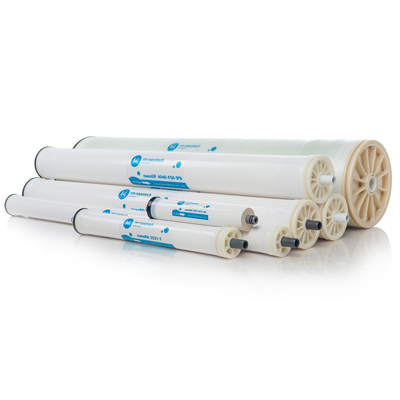
- reverse osmosis membrane tube
- quick filter
- Various tanks for water treatment
- Various application filter media
- 美國 Clack Clark control valve
- 美國 Fleck Control Valve
- 美國 Pentair Control Valve
- 美國 Autotrol Control Valve
- Runxin Control Valve
- Injection treatment
- Technology Development Department
-
brand
- Demo brand
- US DOW
- IDEX USA
- US CLACK
- EMERSON, USA
- American PENTAIR
- SIEMENS Germany
- American PULSAFEEDER
- Denmark DANFOSS
- Thailand HAYCARB
- France SUNTEC
- UK PUROLITE
- Japanese NOP
- Japan OLYMPIA
- Japan KATSURA
- BRAHMA, Italy
- SAGINOMIYA
- HONEYWELL
- AZBIL (YAMATAKE)
- OLTREMARE
- NIPCON
- TROCHOID
- domestic
- EGO
- KATO
- LECIP
- ATS
- JACOBI
- ETATRON
- WAVE CYBER
- BOSCHINI
- NIPPON
- WL
- CASH ACME
- YAZAKI
- RUNXIN
- About | Contact
Understand what "yellow, red, and black water" represent in a table?
Technical explanation
Understand what "yellow, red, and black water" represent in a table?
| Context (Click the title to see the concept) | Naked-eye characteristics | Common causes | Home rapid check | Potential risks | Preliminary treatment direction |
|---|---|---|---|---|---|
| Yellow water | Humic substance | The color is like light black tea, uniform, and does not easily settle; it usually has no iron taste. | Organic matter (humic acid/tannins) or low concentrations of iron in groundwater are oxidized to a yellowish-brown color. | ① Observe with a white cup: The color should be uniform and without granules. ② Filter a cup with fresh activated carbon and see if the color becomes noticeably lighter. ③ Are the colors the same for hot and cold water? | Poor taste, tea stain-like yellow spots; predominantly organic color. | Use activated carbon/anion exchange resin; if iron is present, add pre-precipitation/filtration before entering the main filter media. |
| Red Water | Rust | Orange-red/brick-red, develops a reddish-brown precipitate after standing, and often has a metallic taste. | Rust (pipeline/water heater corrosion), oxidation of groundwater from high-speed rail lines, and disturbance from fire hydrant flushing; occasionally seen.Iron bacteria | ① A reddish-brown precipitate appears after 5–30 minutes of settling in a glass. ② Only in the initial stage of boiling water? → Corrosion at the pipe end. ③ Only in hot water? → Corrosion inside the water heater. | Brown spots on clothing/bathroom fixtures and scale buildup on equipment; long-term exposure may accelerate pipe corrosion. | First, perform mechanical filtration/sedimentation; for medium and high-speed railways: aeration/oxidation (chlorine, air, ozone) + filtration; for localized corrosion, replace galvanized/black iron pipes. |
| Blackwater | Manganese dioxide | Dark gray to black, with small black spots or black mud; if accompanied by a rotten egg smell, it may also contain hydrogen sulfide. | High manganese content (oxidized to black manganese dioxide), manganese scale flaking off pipe walls; orHydrogen sulfideThe reaction produces iron sulfide; newly installed activated carbon sheds powder. | ① Does it smell like rotten eggs? → It smells like hydrogen sulfide. ② Wipe with a paper towel: Black odor spreads easily. ③ Is it a newly installed carbon filter? → Keep rinsing to see if the smell disappears quickly. | Black stains on clothing/tiles, unpleasant taste/odor; hydrogen sulfide is corrosive. | Manganese: Oxidation (air/chlorine/filter media catalysis) + filtration (greensand/pyrolusite/catalytic carbon); Hydrogen sulfide: Aeration/oxidation + activated carbon; Activated carbon powder shedding → thorough rinsing |
How to quickly distinguish the source of "yellow, red, and black water"?
- Yellowish water like black teaMost of the color is organic (humic acid, tannins), which can usually be significantly diluted by activated carbon; if iron is also present, a slight yellowish-brown precipitate will appear when placed in a cup.
- Red water with an orange-red hueIt is usually caused by rust or iron oxidation: reddish-brown particles settle out when left to stand, commonly found in old galvanized/black iron pipes, or after a water outage and subsequent water supply.
- grayish-black liquidCommonly seen when manganese is oxidized into black particles; if it has a "rotten egg smell," it is...Hydrogen sulfideSulfides may participate in the reaction, requiring a desulfurization process. Newly installed activated carbon may also produce carbon powder and black water initially, which can usually be improved by rinsing.
3 safety checks you can do at home (Don't drink!)
- White Cup TestFill a white porcelain/transparent cup with water and observe for 30 minutes to see if the color fades evenly, or if sediment or a colored layer appears.
- Activated carbon controlIf the color becomes significantly lighter after filtering with a "brand new" small activated carbon filter, it is mostly organic color; if the change is not significant and there is sediment, it is more likely to be iron/manganese.
- Hot and cold water comparisonDiscoloration only in hot water → Corrosion inside the water heater or hot water pipes; Discoloration only in the initial stage of boiling water → Rust in the end pipes; Discoloration throughout the house → Problem with the water source or main water pipes.
Friendly reminder: Please check your water usage.Do not drinkAvoid mixing chlorine-containing agents, maintain ventilation, and follow safety instructions.
Metrics and thresholds (to help you align your expectations)
- Iron (Fe)> 0.3 mg/L Redness and brown spots are easily observed.
- Manganese (Mn)> 0.05 mg/L Black spots/black water are easily visible.
- True Color (color/chroma):> 15 CU is often considered "visible shading".
- Turbidity> 1 NTU may affect the appearance and back-end filtration efficiency.
(The above are common suggested values; the actual values should be based on the regulations/standards in your locality.)
Common processing roadmap (first rough segmentation, then fine-tuning)
- Organic chromatic yellow waterActivated carbon → Add when the effect is limitedAnion exchange resinThe drinking end can be usedReverse osmosisPerform final fine processing.
- Red Water (Iron)Aeration/oxidation (air, chlorine, ozone) → Filtration (catalytic sand,greensandWhen dissolved iron is too high, it can be softened first and then combined with oxidizing filter material, and the conditions can be adjusted accordingly.
- Blackwater (manganese/sulfide)Manganese undergoes oxidation + catalytic filtration (e.g.)pyrolusite(Activated carbon for catalysis); if there is a sulfur smell, increase aeration/oxidation, and then polish with activated carbon.
- Pipe corrosion/rustRegionally: Replace old and worn-out iron pipes at the end of the pipeline; Systemically: Assess pH/alkalinity and...Corrosion Inhibition Control(likeOrthophosphate) and material updates.
When should the sample be sent for testing?
- colorLasting for more than 48 hoursAnd this is not a phenomenon that occurs in the initial stage of new filter media.
- AccompaniedA distinct odor (rotten egg smell),metallic tasteorSkin/clothing visibly stained.
- If there are infants, young children, kidney disease patients, or people who are particularly sensitive to manganese/iron in the family.
Recommended items:Iron (dissolved/total iron),Manganese,Color (true color),Turbidity,pH/AlkalinityAdditional tests may be required.Sulfides/H₂SWith microorganisms (such asIron bacteria).
 繁體中文
繁體中文  English
  日本語
日本語