
PRODUCT INFORMATION
How Soft Water Saves Money on Boilers and Cooling Towers: Energy Efficiency and Lifespan
- front page
- product
- Water Treatment Technology
- Technology Development Department
- How Soft Water Saves Money on Boilers and Cooling Towers: Energy Efficiency and Lifespan
Product Information
- heat treatment
-
water treatment
- Arsenic remover
- Desulfurizer
- Deaerator
- Water softener (calcium and magnesium ion removal)
- Carbon filter (removes odor and residual chlorine)
- Sand filter (removal of suspended impurities)
- Iron remover (removal of iron and manganese ions)
- RO water purifier
- Pre-backwash filter
- UV ultraviolet sterilizer
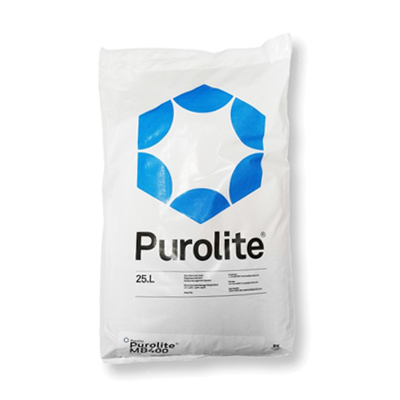
- Ion exchange resin
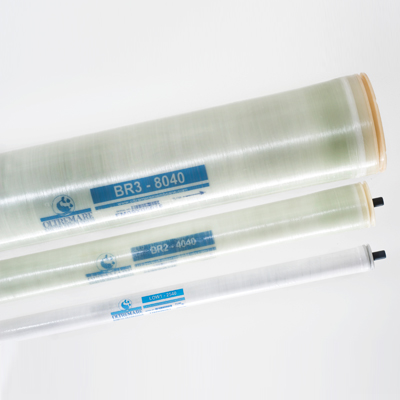
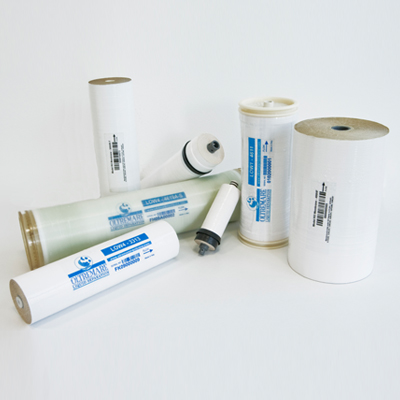
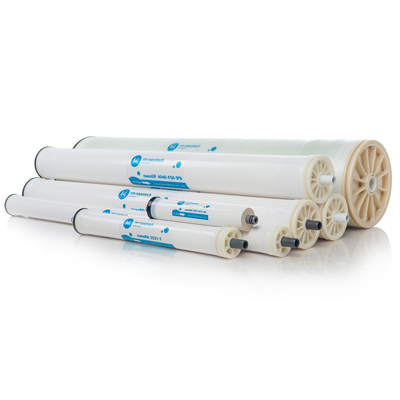
- reverse osmosis membrane tube
- quick filter
- Various tanks for water treatment
- Various application filter media
- 美國 Clack Clark control valve
- 美國 Fleck Control Valve
- 美國 Pentair Control Valve
- 美國 Autotrol Control Valve
- Runxin Control Valve
- Injection treatment
- Technology Development Department
-
brand
- Demo brand
- US DOW
- IDEX USA
- US CLACK
- EMERSON, USA
- American PENTAIR
- SIEMENS Germany
- American PULSAFEEDER
- Denmark DANFOSS
- Thailand HAYCARB
- France SUNTEC
- UK PUROLITE
- Japanese NOP
- Japan OLYMPIA
- Japan KATSURA
- BRAHMA, Italy
- SAGINOMIYA
- HONEYWELL
- AZBIL (YAMATAKE)
- OLTREMARE
- NIPCON
- TROCHOID
- domestic
- EGO
- KATO
- LECIP
- ATS
- JACOBI
- ETATRON
- WAVE CYBER
- BOSCHINI
- NIPPON
- WL
- CASH ACME
- YAZAKI
- RUNXIN
- About | Contact
How Soft Water Saves Money on Boilers and Cooling Towers: Energy Efficiency and Lifespan
Technical explanation
How Soft Water Saves Money on Boilers and Cooling Towers: Energy Efficiency and Lifespan
Why does soft water save money?
By removing hardness ions like calcium and magnesium from water, scaling, a common problem in boilers and cooling towers, is significantly reduced. Less scale means less thermal resistance, less wear, and less downtime. Heat exchange is smoother, energy consumption is reduced, and equipment life is extended.
Boiler: Maximize thermal efficiency and stop burning fuel in vain
- Scale acts like an insulation blanket, forcing the boiler to burn more oil or electricity. Soft water maintains high thermal efficiency and reduces fuel consumption.
- The make-up water does not carry hardness ions, the blowing (blowdown) frequency is reduced, and the heat loss also decreases.
- Maintenance aspect: Reduced fouling → Lower pressure in tube bundles and combustion system → Extended overhaul cycle.
Cooling towers: more stable circulation, reduced water, electricity and maintenance costs
- Scaling of pipes and fillers is slowed down, and the circulating water flow and heat dissipation efficiency are more stable.
- The number of cleaning shutdowns is reduced, the amount of chemicals used is more controllable, and the overall maintenance cost is reduced.
- Improved cooling efficiency has led to a decrease in electricity usage across the entire plant, and peak loads are also better controlled.
Key benefits of soft water (overview)
| oriented | Main effects | Possible savings/gains |
|---|---|---|
| Boiler fuel costs | Thermal resistance decreases and heat exchange efficiency improves | Significant reduction in fuel usage (depending on the system) |
| Cooling tower maintenance costs | Reduce cleaning, downtime and consumables | Reduce annual maintenance costs and downtime losses |
| Equipment life | Reduced risk of scaling and corrosion | Extended useful life and delayed capital expenditure |
| Utilities | Improved blowing and circulation efficiency | Annual water and electricity consumption decreased simultaneously |
Why is the return on investment usually not slow?
The cost of a water softening system and its installation can often be offset by the annualized savings in fuel/electricity, maintenance, and downtime. The improved energy efficiency and reliability resulting from reduced scaling are long-tail benefits, with payback periods often achieved in the short to medium term.
Quick Conclusion
If you're facing declining boiler efficiency, frequent cooling tower cleanings, and high downtime costs, introducing soft water is often the most cost-effective and practical first step: by removing the scale, you'll also regain efficiency, lifespan, and stability.
How long is the payback period for the water softening system I introduced to my factory?
Common payback period ranges
Depending on water consumption, hardness, fuel/electricity prices and on-site maintenance practices, in most cases approximately 1-3 years The payback period is achievable; if heat recovery or process optimization is integrated simultaneously, the payback period may be even faster.
The main factors affecting the payback period
- Water quality and load: The higher the hardness and the greater the load, the more fuel and maintenance costs can be saved.
- Operational Strategy: Blowing control, chemical addition, and maintenance frequency optimization will all accelerate return on investment.
- System scale:Multiple lines, multiple boilers or large cooling water systems, the scale benefits are more significant.
Example Payback Period (Reference)
| type | Annual savings (estimated) | Payback period (estimate) |
|---|---|---|
| Standard industrial soft water system | About NT$80,000 | 2-3 years |
| Combined with heat recovery/process optimization | About NT$120,000 | 1-2.4 years |
| Large multi-valve integration solution | Varies according to scale | 1-3 years |
summary
When considering the three factors of "energy efficiency + maintenance + downtime" together, the return on investment of soft water often exceeds that of most energy-saving retrofit options.
What are the main cost items included in my initial investment in introducing a soft water system?
Cost structure (you should itemize this upfront)
- equipment: Main unit, resin tank, brine tank, pre-filter and necessary valves.
- Installation Project: Includes positioning, connecting pipes, power distribution and commissioning; if existing pipelines are touched, the cost will increase.
- Pipeline/civil engineering renovation: New bypass, blowing, water replenishment and drainage lines are built to ensure smooth operation and maintenance lines.
- Control and monitoring: Flow meter, hardness monitoring, conductivity and pressure difference, etc., for easy maintenance and optimization.
- Education and Training:Operation SOP, regeneration salt consumption management, routine inspection and abnormality elimination.
Summary reminder
In addition to purchasing the equipment, "engineering, monitoring, and training" must also be included in the total budget; subsequent maintenance and consumables (salt, filter media) must be estimated based on actual water quality and load to obtain the true LCC (life cycle cost).
Conclusion: Use soft water to restore the equipment to its proper efficiency
The pain point of boilers and cooling towers is often not equipment failure, but rather water quality that compromises performance. Addressing the hardness first can help you regain thermal efficiency, reduce failure rates, and minimize downtime and maintenance costs. Savings from day one are realized in every kilowatt-hour of fuel, every kilowatt-hour of electricity, and every downtime.
 繁體中文
繁體中文  English
  日本語
日本語