
PRODUCT INFORMATION
Is groundwater sediment normal? The conclusion is: it's common, but not necessarily "normal."
- front page
- product
- Water Treatment Technology
- Technology Development Department
- Is groundwater sediment normal? The conclusion is: it's common, but not necessarily "normal."
Product Information
- heat treatment
-
water treatment
- Arsenic remover
- Desulfurizer
- Deaerator
- Water softener (calcium and magnesium ion removal)
- Carbon filter (removes odor and residual chlorine)
- Sand filter (removal of suspended impurities)
- Iron remover (removal of iron and manganese ions)
- RO water purifier
- Pre-backwash filter
- UV ultraviolet sterilizer
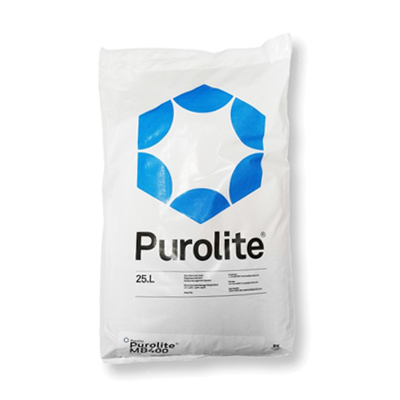
- Ion exchange resin
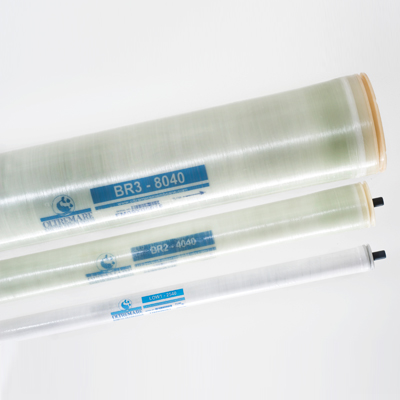
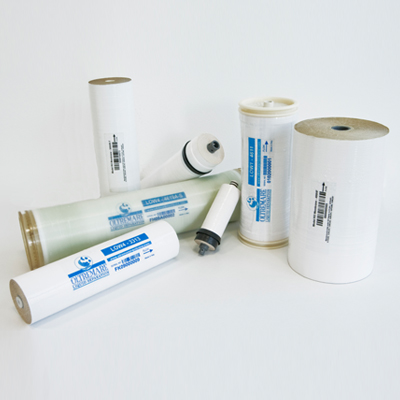
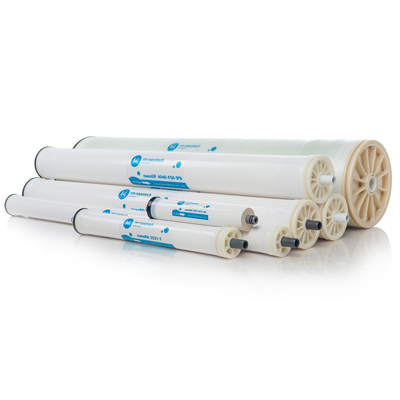
- reverse osmosis membrane tube
- quick filter
- Various tanks for water treatment
- Various application filter media
- 美國 Clack Clark control valve
- 美國 Fleck Control Valve
- 美國 Pentair Control Valve
- 美國 Autotrol Control Valve
- Runxin Control Valve
- Injection treatment
- Technology Development Department
-
brand
- Demo brand
- US DOW
- IDEX USA
- US CLACK
- EMERSON, USA
- American PENTAIR
- SIEMENS Germany
- American PULSAFEEDER
- Denmark DANFOSS
- Thailand HAYCARB
- France SUNTEC
- UK PUROLITE
- Japanese NOP
- Japan OLYMPIA
- Japan KATSURA
- BRAHMA, Italy
- SAGINOMIYA
- HONEYWELL
- AZBIL (YAMATAKE)
- OLTREMARE
- NIPCON
- TROCHOID
- domestic
- EGO
- KATO
- LECIP
- ATS
- JACOBI
- ETATRON
- WAVE CYBER
- BOSCHINI
- NIPPON
- WL
- CASH ACME
- YAZAKI
- RUNXIN
- About | Contact
Is groundwater sediment normal? The conclusion is: it's common, but not necessarily "normal."
Technical explanation
Is groundwater sediment normal? The conclusion is: it's common, but not necessarily "normal."
Seeing sediment in groundwater is actually quite similar to the "slag" that appears at the bottom of the pot after you've cooked soup:Some are just natural mineral particles.Some warnings indicate that "the well, pipeline, or water quality is changing."
Therefore, a more accurate statement is:It is common for groundwater to have sediment.But you have to look at it.Where did it come from? How frequently does it appear? Has the quantity suddenly increased?,as well asWill it change color after being placed?.
Where do groundwater sediments come from? The most common types are these:
| Possible sources (concepts) | What you will see | Quick self-assessment method | Common processing directions |
|---|---|---|---|
| Formation particles: Silt / Sand / Clay | The water contains fine, yellowish-brown or gray sand that sinks quickly to the bottom of the cup, creating a misty, foggy appearance. | Let the transparent bottle stand:Sand that sinks quickly is mostly sand/silt. | Well washing/workover screen + front-end coarse filter (sand and gravel filtration, cyclone sand removal) |
| Oxidation produces: Iron / Manganese + Oxidation | After a while, it will turn yellow → orange → brown, or dark brown fine powder; it easily stains sinks and toilets. | It looks clear when first drawn, but the color darkens after contact with air = common iron/manganese precipitation. | First aerate/oxidize → then filter with the appropriate filter media + periodic backwashing |
| Scale/crystallization: Scaling (often related to hardness) | White powder, white hard shell, especially noticeable on water heaters/boilers. | White granules that foam when exposed to acid (such as diluted vinegar) = common carbonate scale | Softening (ion exchange) or pretreatment adjustment; priority treatment for hot water end. |
| Pipeline corrosion/stripping: Corrosion | Reddish-brown rust flakes, metallic smell; the smell becomes more pronounced when boiled after a long period of disuse. | The problem is particularly severe only in a certain section of pipeline = pipeline deviation issue | Material replacement (stainless steel/plastic), corrosion control (pH/alkalinity), pre-filter |
| Biofilm / Iron bacteria | A sticky, snot-like, brownish, thread-like substance, occasionally with a foul odor. | It feels smooth, has a stringy texture, and sinks slowly. | Well body disinfection and iron removal system optimization; chemical dosing control and filtration as needed. |
| Colloid/Organic Matter | It doesn't sink easily, and the water stays misty. | If it doesn't clear up even after sitting for a long time, it may contain colloids or fine suspended matter. | Coagulation/flocculation + sedimentation/filtration, or alternatively, more refined methods such as ultrafiltration. |
Three-minute assessment: Which type of sediment does your sediment resemble?
- Let the clear bottle stand for 30–60 minutes.
- It sank to the bottom quicklyMostly sand and silt (stratum particles)
- It hasn't sunk for a long time, and it's always foggy.: Colloidal or fine suspended matter
- See if the color "deeperses" over time.
- Freshly drawn up, turns yellowish-brown/dark brown after sitting for a while.Common iron/manganese oxidation precipitation
- Feel the texture (only a small amount of contact is allowed, provided it is safe to do so).
- rough sandy textureParticulate matter
- Sticky and stringyPossible biofilm/iron bacteria biofilm
If you are working on process engineering, boilers, or RO pretreatment: In addition to "visible sediment", it is also recommended to test turbidity and suspended solids, because many times "it looks okay", but it is actually a slow torment for the filter, resin and membrane.
How to treat groundwater sediment? The most cost-effective and least disruptive approach is to follow a "source-to-end" method.
- First, address the source: the condition of the well and the pumping station.
- Suddenly a lot of sediment appearedCommon causes include disturbance of sand layers within the well, aging of the well screen, wellbore collapse, or changes in pumping volume/head.
- Services include: well cleaning/repair, and adjusting the pumping flow rate (to avoid pumping too hard at once and uploading sand).
- Next, perform coarse separation: first, block the "large particles".
- Sand/fine sand: Prioritize cyclone sand removal or sand filtration at the front end.
- Benefits: This prevents downstream filters, resins, and membranes from becoming a black hole of consumables.
- Fine filtration: Makes water consistently "look clean".
- For small-volume applications and quick deployment: cartridge or bag filter.
- High usage, significant sedimentation, and a desire to reduce consumables: Multi-media backwashing filtration is a more cost-effective option.
- If iron and manganese precipitate: the key is to "oxidize first, then filter, and then backwash".
- Relying solely on filter cartridges often doesn't last long because iron/manganese will continuously generate new fine powder.
- Common practice: First aerate or add oxidant → then use appropriate filter media for interception → maintain flux through fixed backwashing
- If it's white limescale: treating the hardness is more effective than continuous cleaning.
- The hot water end, heat exchanger, and boiler are the most noticeable.
- Instead of scraping off the grime every day, it's better to address the hardness at the front end (softening or pretreatment adjustment).
What situations warrant special attention? These are the "red flags."
- Yesterday was fine, but today suddenly there's a lot of sand.The most likely cause is a change in the well body, well screen, or pumping conditions.
- Black fine powder + equipment clogs quicklyIt could be manganese or a mixture of oxides; don't rely solely on the filter element.
- Slippery, smelly, like snotThe treatment strategy for biofilms or iron bacteria may be completely different from that for "simple particles".
Want to find the right solution faster? You only need to grasp 3 clues.
| The clues you provided | What can I help you determine? |
|---|---|
| Sediment color (yellow/orange/black/white/gray) | The general issues fall into categories such as particulate matter, iron and manganese precipitation, scale buildup, or biological problems. |
| How quickly does it sink (sinks in 1 minute? Still foggy after 1 hour?) | Particles vs. Colloids/Fine Suspended Matter Boundary |
| Does it change color immediately when you smoke it? Or does it only change color after you let it sit for a while? | Does it involve oxidation precipitation (iron/manganese) and pretreatment strategies? |
Finally: Transform the "sedimentation problem" of groundwater into "controllable and stable water quality".
If you want the sedimentation process to go beyond simply "making do for now," but rather to achieve...Predictable, maintainable, and non-explosive consumablesThe key is usually to design the process as "front-end separation + backwashing system + stable control" so that the sediment no longer runs all the way to the back end.
To quickly align on-site conditions and make the solution easier, you can directly use the shortest path to check your on-site well water and water usage needs with your team: Book a meeting.
 繁體中文
繁體中文  English
  日本語
日本語