
PRODUCT INFORMATION
Fully automatic water softener technology
- front page
- product
- Water Treatment Technology
- Technology Development Department
- Fully automatic water softener technology
Product Information
- heat treatment
-
water treatment
- Arsenic remover
- Desulfurizer
- Deaerator
- Water softener (calcium and magnesium ion removal)
- Carbon filter (removes odor and residual chlorine)
- Sand filter (removal of suspended impurities)
- Iron remover (removal of iron and manganese ions)
- RO water purifier
- Pre-backwash filter
- UV ultraviolet sterilizer
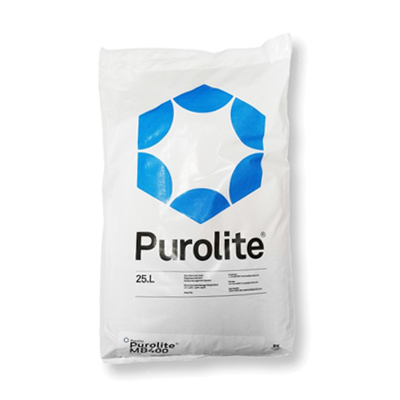
- Ion exchange resin
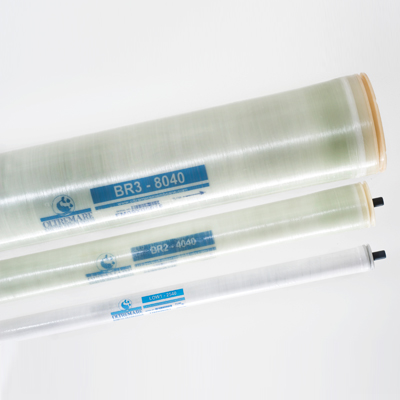
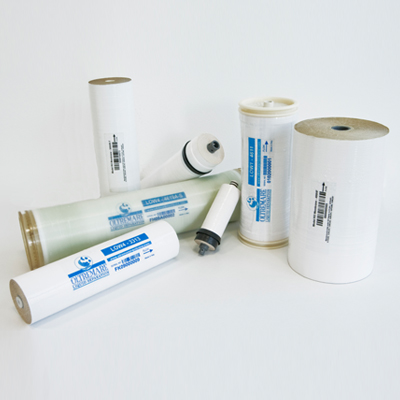
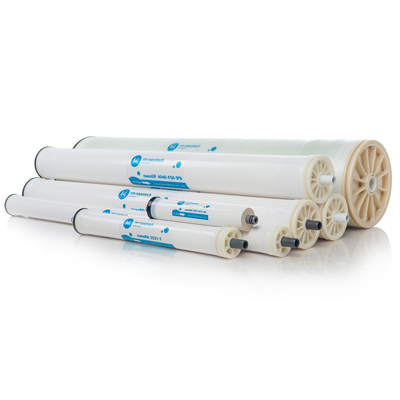
- reverse osmosis membrane tube
- quick filter
- Various tanks for water treatment
- Various application filter media
- 美國 Clack Clark control valve
- 美國 Fleck Control Valve
- 美國 Pentair Control Valve
- 美國 Autotrol Control Valve
- Runxin Control Valve
- Injection treatment
- Technology Development Department
-
brand
- Demo brand
- US DOW
- IDEX USA
- US CLACK
- EMERSON, USA
- American PENTAIR
- SIEMENS Germany
- American PULSAFEEDER
- Denmark DANFOSS
- Thailand HAYCARB
- France SUNTEC
- UK PUROLITE
- Japanese NOP
- Japan OLYMPIA
- Japan KATSURA
- BRAHMA, Italy
- SAGINOMIYA
- HONEYWELL
- AZBIL (YAMATAKE)
- OLTREMARE
- NIPCON
- TROCHOID
- domestic
- EGO
- KATO
- LECIP
- ATS
- JACOBI
- ETATRON
- WAVE CYBER
- BOSCHINI
- NIPPON
- WL
- CASH ACME
- YAZAKI
- RUNXIN
- About | Contact
Fully automatic water softener technology
Technical explanation
automatic water softener
Fully automatic water softener is to realize automatic control of every step of water softener operation and regeneration, and use time, flow or sensor to start regeneration. Usually the cycle process of a fully automatic water softener consists of the following specific steps.
1.) run
Under a certain pressure and flow, the raw water flows through a container (water softener) equipped with Na+ type cation exchange resin, and the exchangeable ion Na+ in the resin is replaced with Ca++, Mg++ ions in the water, so that the Ca++, Mg++ content of the container effluent reaches Our requirement. We express the ion exchange capacity of a water softener as the working exchange capacity, and its unit can be mol, eq, ppm, etc.
2.) Backwash
When all Na+ in the sodium ion exchange resin is replaced by Ca++ Mg++, the resin fails. After the resin fails, backwash with water from bottom to top before regeneration. The purpose of backwashing has two purposes. One is to loosen the resin layer compressed during operation through backwashing, which is beneficial to the resin particles and the regeneration solution. The second is to remove the suspended solids and broken resin particles accumulated on the surface of the resin layer during operation, so that the water flow resistance of the water softener will not increase. In order to ensure that the complete resin is not washed away during backwashing, when designing the water softener, a certain backwashing space should be left on the resin layer. The height of the resin layer is used as the backwash expansion height. The backwash flow rate it adapts to is 12m/h (5gpm/ft2) (the inlet water temperature is 10 degrees Celsius). The quality of the backwash directly affects the regeneration effect.
3.) Living
The regeneration liquid flows through the failed resin layer at a certain concentration and flow rate, and restores the resin to restore its original exchange capacity (factors affecting the regeneration effect will be specifically explained in other technical education units).
4.) Replacement
After the regeneration liquid is fed, there is salt solution in the expansion space and resin layer of the water softener that has not yet participated in the regeneration and exchange. The clean water is mixed with the regeneration liquid. Generally, the amount of cleaning water is 0.5 to 1 times the volume of the resin.
5.) Washing
The purpose is to remove the residual regeneration liquid in the resin layer and the products during regeneration, usually at the normal running flow rate until the water is qualified.
6.) Salt cylinder rehydration
Fill the salt cylinder with the right amount of water to dissolve the salt needed for regeneration. Typically 1 gallon of water dissolves 3 pounds of salt, or 1 cubic meter
of water to dissolve 360 Kg of salt (concentration of 26.4%). In order to ensure that the concentration of the salt solution in the salt cylinder can reach saturation, first of all, the dissolution time should be ensured not less than 6 hours, and the second is to keep the salt level in the salt cylinder always higher than the water level. In layman's terms, the salt cone should see the salt but not the water.
Factors affecting the exchange capacity of a water softener
1. Flow rate: (gpm/ft2 m/h)
Generally, the larger the flow rate, the larger the working layer required for ion exchange, the effective utilization of resin will decrease, and the water production capacity of the water softener will increase, but the time for ion reaction is limited, so the flow rate should not be too large. Conversely, the smaller the flow rate, the less working layer is required, and the resin utilization rate increases, but the water production capacity of the equipment decreases. If the flow rate is too small, the raw water will only exchange ions with the resin surface, and the water cannot enter the resin. The surface of the resin usually only provides an exchange capacity of 20%, and the interior of the resin can provide an exchange capacity of 80%. A reasonable exchange flow rate is very important to improve the water production capacity and exchange capacity of the water softener. It is generally recommended that the operating flow rate should be controlled at (20-30 m/h in Asia, 美國4-10gpm/ft2), and small devices can be appropriately increased.
2. Contact time between water and resin: (gpm/ft3)
The longer the contact time between water and resin, the more sufficient the exchange is, but the relative water production capacity per unit resin decreases. Therefore, a reasonable contact time is very important for the economical operation of the water softener. The general recommendation is to pass 1 to 5 gallons of water per minute (1.0-5.0 gpm/ft3) per cubic inch of resin or eight to forty times the resin load per hour (8-40bv/h)
3. Height of resin layer
The lower the resin layer, the greater the effect of the flow rate on its exchange capacity. When the height of the resin layer reaches 30 feet (762mm), the effect of the flow rate caused by the height of the resin layer on its exchange capacity can be reduced to a relatively low level. Therefore, it is generally recommended that the height of the resin layer be greater than 30 feet (762mm)
4. Influent salt content
The salinity of the influent directly affects the quality of the effluent, and the total content of K+ and Na+ in the salinity of the influent has a great influence on the quality of the effluent. Example: When the salt content of the raw water is 500PPM where Na+ and K+ are zero, and the hardness is 10mol/m3, if we regenerate with 15 lb/ft3 (240g/l), the effluent quality can reach nearly 0.00. When the salt content of the raw water is 250PPM and Na+ and K+ are 500PPM, and the hardness is 5mol/m3, we also use 15 lb/ft3 (240g/l) effluent water with a hardness of 0.038mmol/L and close to 0.04mmol/L (more than the national low pressure boiler). Inlet water requirements), if the effluent water is below 0.03mmol/L, it must be used (18 lb/ft3, 290g/l)
5. Temperature
The increase of water temperature can speed up internal diffusion and membrane diffusion at the same time, improve the exchange capacity, whether it is operation or regeneration, it is beneficial to the water softener to properly increase the water temperature.
6. Ingredient quality (NaCl)
The higher the purity of the regenerant, the higher the degree of regeneration of the resin, and the less ion leakage in the effluent. Therefore, improving the purity of the regenerant and using softened water-soluble salts can improve the degree of regeneration.
7. Regenerant flow rate
Generally, the smaller the regeneration liquid flow rate, the better the regeneration effect. But too low regeneration fluid flow will make the regeneration time too long, so that the regenerant will only regenerate the resin surface after passing through the resin, so it is generally required that the regeneration fluid flow rate is 0.25-0.9 gpm/ft3 (or the flushing flow rate 4-6m/h, countercurrent flow). Regeneration 2-3 m/h)
8. Regenerant Concentration
According to the principle of ion balance, the increase of the concentration of the regeneration solution can improve the exchange capacity of the resin, but if the concentration of the regeneration solution is too high, the resin diffusion layer will be compressed, so that part of the counter ions in the diffusion layer will become the counter ions in the fixed layer, so that the The active range of the diffusion layer becomes smaller, thereby reducing the regeneration effect. Generally, the concentration of salt solution should be controlled at about 10%.
9. Amount of regenerant
The exchange of resin is theoretically carried out in an equivalent amount, that is, 1 mol of regenerant can restore a 1 mol exchange capacity, (that is, 58.43g of NaCl is used). But in fact, the consumption of regenerant is much larger than the theoretical value. Experiments show that the more the amount of regenerant, the greater the working exchange capacity of the resin obtained. The quality of the effluent is better. However, with the continuous increase of the amount of regenerant, the increase of the working exchange capacity will be less and less. The economy will continue to decline. Hence the regeneration of salt consumption. According to different raw water quality, under the condition of ensuring a certain exchange capacity and water quality, a more economical and reasonable salt consumption should be selected as much as possible. In 美國 usually most water softeners use 240g/liter salt to regenerate one liter of resin.
10. Resin
The exchange capacity provided by different resins is not the same. Generally, most water softeners require that the cross-linking degree of the resin used should not be lower than 7.
How to choose a fully automatic control valve:
To measure the performance of a fully automatic control valve, its adaptability, reliability and economy should be comprehensively considered.
1. Adaptability
The so-called adaptability is that it can meet the different needs of users, and can provide different flow directions and times of water treatment equipment in different processes according to the requirements of users, so that the equipment can operate under the parameters required by relevant national regulations. Nearly 100 specifications of flow orifice plates are available for users to choose from, which can meet user requirements to the greatest extent. The size of CLACK's ejector is also double or even several times larger than that of other manufacturers' control valves and has strong interchangeability. Each type of control valve has at least 7 sizes of ejectors for users to use. CLACK control valves are available in a wide range of sizes, with up to 16 models from 3/4” to 3” inlet and outlet diameters, with flow rates ranging from a minimum of 6.36 t/h to 56.8 t/h (at 15psi pressure drop) and others Unmatched by any brand of control valve, it is a true engineer's control valve.
2. Reliability
CLACK company proposes higher standards than 美國 Water Treatment Association to require its own products. Each of its parts under pressure is designed to meet 250,000 cyclic pressure tests from 0 to 190 psi. (The 美國 Water Quality Association only requires 100,000 cycle tests from 0 to 150 psi) The cycle test for regeneration and operation must meet 10,000 cycles, ie: if regenerated on average once a day, it will last 27 years. In order to meet these requirements, the control valves with inlet and outlet pipe diameters larger than 1” manufactured by CLACK are all made of lead-free brass and reinforced with Epoxy technology on the surface layer as the valve body material.
3. Economical
After a good automatic control valve meets the above two requirements, it needs a reasonable sales price. By comparing the CLACK control valve in the overall (life cycle, maintenance cycle, maintenance cost) price is not more expensive than similar products, which is why the CLACK control valve sales in the United States have achieved great success. Its market share reaches more than 80%. Become the most popular control valve.
 繁體中文
繁體中文  English
  日本語
日本語