
Jacobi CH23 ion exchange resin is supplied by package volume or weight. The actual filling volume needs to be calculated based on the type and concentration of metals in the influent, the target effluent standard, the design flow rate, and the contact time. Please contact 瑞順 for confirmation of packaging specifications and delivery time.
PRODUCT INFORMATION
Jacobi CH23 ion exchange resin | Chelating resin for the removal of polymetallic and cyanide complexes
- front page
- product
- Technology Development Department
- For heavy metal removal
- Jacobi CH23 ion exchange resin | Chelating resin for the removal of polymetallic and cyanide complexes
Product Information
- heat treatment
-
water treatment
- Deaerator
- Desulfurizer
- Arsenic remover
- Water softener (calcium and magnesium ion removal)
- Carbon filter (removes odor and residual chlorine)
- Sand filter (removal of suspended impurities)
- Iron remover (removal of iron and manganese ions)
- RO water purifier
- Pre-backwash filter
- UV ultraviolet sterilizer
- Ion exchange resin
- reverse osmosis membrane tube
- quick filter
- Various tanks for water treatment
- Various application filter media
- 美國 Clack Clark control valve
- 美國 Fleck Control Valve
- 美國 Pentair Control Valve
- 美國 Autotrol Control Valve
- Runxin Control Valve
- Injection treatment
- Technology Development Department
-
brand
- Qin Sen
- 義大利 ATLAS
- 日本 TOHKEMY
- 義大利AQUA
- US DOW
- IDEX USA
- US CLACK
- EMERSON, USA
- American PENTAIR
- SIEMENS Germany
- American PULSAFEEDER
- Denmark DANFOSS
- Thailand HAYCARB
- France SUNTEC
- UK PUROLITE
- Japanese NOP
- Japan OLYMPIA
- Japan KATSURA
- BRAHMA, Italy
- SAGINOMIYA
- HONEYWELL
- AZBIL (YAMATAKE)
- OLTREMARE
- NIPCON
- TROCHOID
- domestic
- EGO
- KATO
- LECIP
- Taiwan ATS
- JACOBI
- ETATRON
- WAVE CYBER
- BOSCHINI
- NIPPON
- WL
- CASH ACME
- YAZAKI
- RUNXIN
- About | Contact
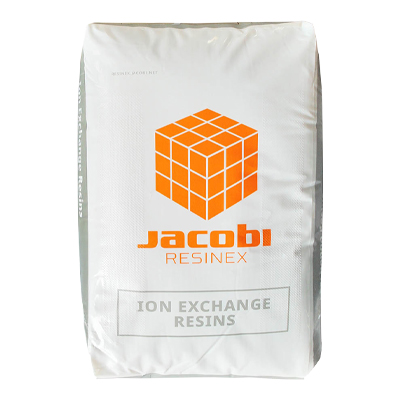
Electroplating and metal surface treatment wastewater, cyanide-containing wastewater, and precious metal recovery processes Jacobi CH23 ion exchange resin | Chelating resin for the removal of polymetallic and cyanide complexes
It can simultaneously process multiple heavy metal and cyanide complexes, including precious metals such as gold and silver.
Jacobi CH23 is a chelating ion exchange resin. The manufacturer explicitly states that it effectively removes cadmium, zinc, copper, chromium, mercury, lead, gold, silver, and cyanide complexes. It is suitable for treating wastewater from electroplating and metal surface treatment, cyanide-containing wastewater, and precious metal recovery processes. 瑞順 is the sole distributor of Jacobi in Taiwan.
The wastewater discharge standards regulate the concentration of each individual metal, but the wastewater from electroplating plants is never a single metal. Copper, nickel, zinc, and chromium may be present on the same discharge line at the same time, with varying concentrations and pH values that fluctuate with the process.
Chemical precipitation treatment has different optimal precipitation pH values for each metal, and simultaneously suppressing all metals often requires multiple pH adjustments and large amounts of reagents, resulting in additional treatment costs for the generated sludge. Using conventional ion exchange resins, the exchange sites are often filled by the large amounts of sodium and calcium in the wastewater, causing the metals actually being captured to penetrate.
Even more challenging are cyanide complexes. Cyanide complexes formed with metals exist in water as anions, which are completely undetectable by ordinary cation exchange resins; moreover, these complexes are highly stable, requiring additional oxidation steps and residence time for cyanide removal.
How chelating resins can simultaneously treat multiple metals and complexes
The functional groups of chelating resins form coordination bonds with metal ions. The strength of this bond depends on the coordination ability of the metal itself, rather than its concentration. Therefore, even in wastewater with sodium and calcium concentrations several orders of magnitude higher, the resin will still preferentially bind heavy metals.
Different metals bind to the same functional group with varying strengths, forming a selective sequence. In practical terms, this means that metals earlier in the sequence are preferentially adsorbed, and upon saturation, they displace metals later in the sequence. This sequence must be known when designing a system to correctly determine the penetration order and regeneration timing.
CH23 is characterized by its broad coverage, ranging from common cadmium, zinc, copper, and chromium to highly toxic mercury and lead, and even gold and silver with recycling value, all within the processing range listed by the manufacturer; it can also handle cyanide complexes, which is a clear advantage in cyanide-containing waste lines.
During regeneration, the metal is washed out with an appropriate desorbent. The concentrated regenerated solution has a high metal concentration and is usually valuable for recycling in precious metal applications.
Jacobi CH23 Product Positioning
+ Chelating ion exchange resin, selective for heavy metals
+ Can remove cadmium, zinc, copper, chromium, mercury, lead, gold, and silver.
+ Can handle cyanide complexes
+ Suitable for wastewater environments containing multiple metals.
+ The regenerated solution can serve as a concentrated source for precious metal recovery.
How to choose from the CH series
+ Multi-metal mixtures, cyanide-containing wastewater, precious metal recovery: CH23 on this page
+ Highly selective removal of mercury:Jacobi CH80 Ion Exchange Resin
+ Brine/salt softening, calcium and magnesium removal in high-salinity backgrounds:Jacobi CH12 Ion Exchange Resin
+ General heavy metal removal:Jacobi CH20 Ion Exchange Resin
If the wastewater contains multiple metals with different effluent standards, it is recommended to first perform water quality analysis and obtain the resin selectivity sequence before deciding on a single-bed or multi-bed configuration. Complete model information is available at [link to product page].For heavy metal removalBrowse by category.
Applicable fields
+ Heavy metal removal from electroplating and metal surface treatment wastewater
+ Treatment of metal cyanide complexes in cyanide-containing wastewater
+ Precious Metal Recycling: Concentration and Recycling of Gold and Silver
+ Final oversight of water discharge heavy metal control projects
+ Copper recovery from wastewater in printed circuit board manufacturing process
 繁體中文
繁體中文  English
  日本語
日本語