
PRODUCT INFORMATION
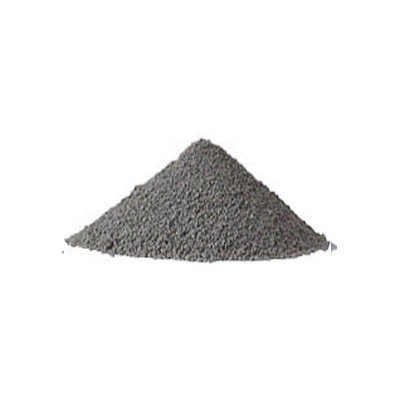
Clack Natural Zeolite (NSF Certified • 0.55mm • 14×30 Mesh)
- front page
- product
- water treatment
- Removal of impurities (raw water)
- Clack Natural Zeolite (NSF Certified • 0.55mm • 14×30 Mesh)
Product Information
- heat treatment
-
water treatment
- Deaerator
- Desulfurizer
- Arsenic remover
- Water softener (calcium and magnesium ion removal)
- Carbon filter (removes odor and residual chlorine)
- Sand filter (removal of suspended impurities)
- Iron remover (removal of iron and manganese ions)
- RO water purifier
- Pre-backwash filter
- UV ultraviolet sterilizer
- Ion exchange resin
- reverse osmosis membrane tube
- quick filter
- Various tanks for water treatment
- Various application filter media
- 美國 Clack Clark control valve
- 美國 Fleck Control Valve
- 美國 Pentair Control Valve
- 美國 Autotrol Control Valve
- Runxin Control Valve
- Injection treatment
- Technology Development Department
-
brand
- 日本 NIKKISO
- Qin Sen
- 義大利 ATLAS
- 日本 TOHKEMY
- 義大利AQUA
- US DOW
- IDEX USA
- US CLACK
- EMERSON, USA
- American PENTAIR
- SIEMENS Germany
- American PULSAFEEDER
- Denmark DANFOSS
- Thailand HAYCARB
- France SUNTEC
- UK PUROLITE
- Japanese NOP
- Japan OLYMPIA
- Japan KATSURA
- BRAHMA, Italy
- SAGINOMIYA
- HONEYWELL
- AZBIL (YAMATAKE)
- OLTREMARE
- NIPCON
- TROCHOID
- domestic
- EGO
- KATO
- LECIP
- Taiwan ATS
- JACOBI
- ETATRON
- WAVE CYBER
- BOSCHINI
- NIPPON
- WL
- CASH ACME
- YAZAKI
- RUNXIN
- About | Contact
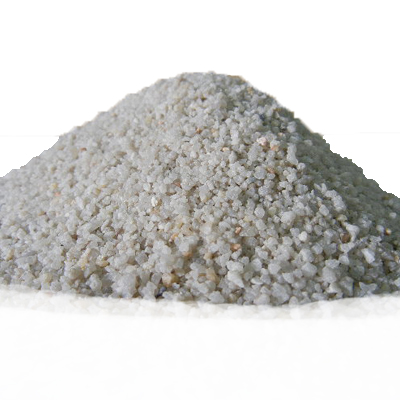
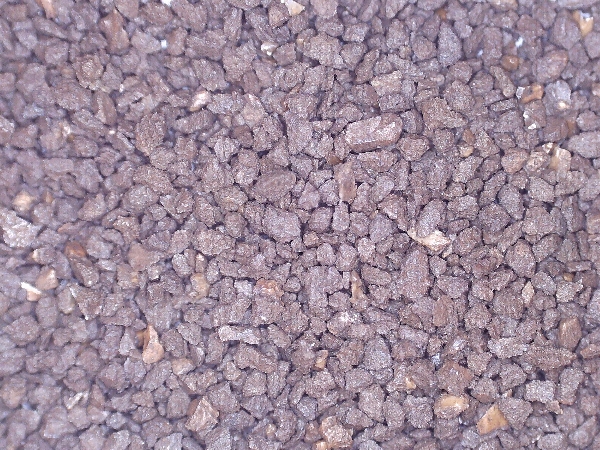
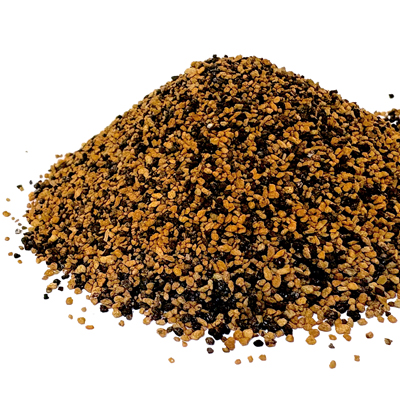
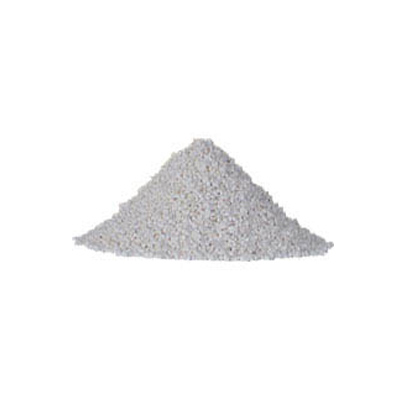
Suitable for sand filters and multi-media filter beds, natural zeolite has many pores and a large specific surface area, effectively intercepting suspended impurities. Clack Natural Zeolite (NSF Certified • 0.55mm • 14×30 Mesh)
A new choice for sand filter media: natural zeolite with numerous large pores and NSF control for more thorough filtration of suspended impurities.
砂濾濾料選得好,除濁效果差很多
砂濾與多介質過濾床的除濁效果,取決於濾料的孔隙結構與粒徑。Clack 天然沸石具天然多孔結構、比表面積大,能更有效攔截水中的懸浮雜質。
天然沸石過濾的運作機制
沸石為多孔矽鋁酸鹽礦物,天然孔隙多、比表面積大;水通過沸石濾層時,泥砂與懸浮顆粒被攔截於孔隙與粒間,達到除濁效果。0.55mm 粒徑、14×30 目的級配兼顧過濾精度與通透性,並可與石英砂、無煙煤組成多介質濾層。
Clack 天然沸石的品質特色
美國原裝進口、通過 NSF 認證,適用飲用水等級應用。美國 Clack 克拉克成立於 1944 年、位於美國威斯康辛州,是水處理設備與濾材領域的領導品牌,濾料品質穩定、粒徑級配一致。
砂濾濾料新選擇,天然沸石孔多面積大、NSF 把關,懸浮雜質過濾更到位技術講解
| 美國 Zeolite | General filter sand | |
| Special micropores | Zeolite surface covered with micropores(3 microns) | none |
| efficiency | Higher than ordinary filter sand100 times | none |
| characteristic | High hardness and durability, less pressure drop, providing high flow rate | The high pressure drop causes only the uppermost filter sand to be effective in the filter layer. |
| certified | 美國NSF 61 certification | no certification |
What is natural zeolite? Let me explain in layman's terms.
Natural zeoliteIt's actually a type of crystalline mineral that "naturally has maze-like holes": its skeleton is mostly...Microporous crystalline aluminosilicateThe pores can trap water molecules and exchange ions, so they are particularly good at...AdsorptionandIon exchange(You can think of it as: a rigid "honeycomb hotel + ion locker".)
The porous structure of natural zeolite: like a "three-dimensional maze hotel".
Imagine you walk into an incredibly complex hotel:
- corridor=channels
- Room=cavities
- Wall frame= A corner-sharing network composed of SiO₄ and AlO₄ tetrahedral cells pieced together one after another.
Because the skeleton contains aluminum (Al), the whole structure has a slight "negative charge", so it needs some exchangeable cations (commonly like Na⁺, K⁺, Ca²⁺) to balance it; and these ions and water molecules stay in the channels, making natural zeolite a material that is very good at "storing" and "exchanging".
(If you want to quickly see the encyclopedia definition first, you can start with Zeolite.)
Adsorption vs. Ion Exchange: What exactly does natural zeolite "grab"?
These two are often discussed together, so I'll break them down in a more memorable way:
- AdsorptionLike Velcro, molecules/odors "stick" to the surface or pore walls; essentially, it is...The concentration on the interface increases(Surface phenomenon).
(For the most rigorous definitions of the terminology, please refer to the IUPAC Gold Book.) - Ion exchangeLike changing keys in a locker, ions with the same charge exchange positions—cations in a solution "switch shifts" with exchangeable cations on a material.
Practical judgments you will often see
- Want to deal withTaste, some VOCs, certain organic compounds → Often leans towards the "adsorption" approach (but depends on pore size, material surface characteristics, and pretreatment).
- Want to deal with NH₄⁺ (ammonium)Some metal cations → Ion exchange is the main method most of the time, especially in natural zeolites. Clinoptilolite These types of applications are very common.
A table of common uses of natural zeolite
| Application scenarios | What does natural zeolite do? | Common goals/effects | Where will you see it? |
|---|---|---|---|
| Water treatment / wastewater | Primarily based on ion exchange, supplemented by adsorption | Remove NH₄⁺ and reduce the risk of ammonia toxicity | Filter bed packing, polishing section, and front and rear reinforcement sections (sometimes also used as "emergency" sections). |
| Aquaculture/Aquarium | Capture the ammonium in the water (mostly through ion exchange). | More stable water quality and reduced odor | Filter media, substrate, or filter cartridge media |
| Livestock/Deodorization | Adsorption + ion exchange (depending on formulation and particle size) | Reduce ammonia odor and improve environmental experience | Bedding material addition, deodorizing medium, composting management |
| Agriculture/Soil Improvement | Enhancing soil's fertility retention capacity (see CEC) | It is more effective at "retaining" K⁺, NH₄⁺, Ca²⁺, etc. | Soil amendment materials, fertilizer carriers, and slow-release technology combined |
| Industrial adsorption/drying/molecular sieve extension | Utilizing pore size and specific surface area properties | Selectivity for specific molecular sizes (depending on material and specifications) | Adsorption tower, drying section, gas treatment (select according to requirements) |
Choosing Natural Zeolite: Don't Just Look at the Word "Natural": 6 Key Practical Points
If you're going to use natural zeolite for filtration/adsorption, these 6 points are usually more crucial than "how white it looks":
- First, clearly explain the target object.What exactly do you need to deal with? NH₄⁺? Iron and manganese? Odors? A specific metal? (Different targets will require completely different solutions)
- Particle size / Mesh countToo fine a particle size results in high pressure loss and easy clogging; too coarse a particle size results in insufficient contact and low efficiency—often, a difference of just one particle size is like using a completely different material.
- CEC (Cation Exchange Capacity)When it comes to cation exchange, CEC is like a "combat power value." A good number doesn't necessarily mean it's good, but without this number, it's difficult to estimate the upper limit of exchangeability.
- Purity and impurities (varying greatly from mining area)Both are called natural zeolite, but their different sources may represent two different worlds. If it is to be used in engineering, it is best to see XRD/XRF test results or grade specifications.
- Pretreatment and regeneration methodsCan it be regenerated with saline solution? How much degradation will occur after regeneration? This will directly affect your consumable costs and maintenance frequency.
- Your water quality background (competing ions will fight for space)When the hardness is high, or there are many sodium/calcium/magnesium or other competing ions, the exchange sites will be "locked in" first, and the actual performance may be different from what is expected.
Usage and Safety Reminder: Be Really Careful About Dust.
In most cases, natural zeolite itself is considered safe, butDust ManagementThis must be taken seriously. Certain natural zeolite minerals (e.g.) ErioniteIn exposure to "fibrous, inhalable dust", it may be associated with an increased risk of lung disease.
In practice, the key points you need to focus on are very simple:Sources must be clear, testing must be thorough, dust pollution must be avoided, and protective gear must be worn during construction/material handling.Doing these things will usually keep the risk very low.
Finally, let me use a sentence to help you make a decision.
If what you want is to "capture something and slowly exchange/release it", natural zeolite is like a durable "ion locker + porous hotel"; but if you are looking for "broader spectrum of organic adsorption" or "extremely high specific surface area adsorption", then you will most likely also evaluate other adsorbent materials (each material has its own sweet spot).
Want to apply it more practically? I suggest you first fill in these 3 pieces of information.
| The information you provided | Why it is important | What designs will be affected? |
|---|---|---|
| Water source type (tap water/groundwater/wastewater/recycled water) | The background ions and pollution patterns differ greatly. | Particle size, packing height, and whether pre-filtration is required |
| Main targets (NH₄⁺/iron and manganese/odor/VOC/metal) | Determining whether "adsorption" or "exchange" is the primary or secondary process | Material type, recycling strategy, contact time |
| Flow rate and allowable pressure loss | In engineering, this is often the key to success or failure. | Tower diameter, filtration rate, backwash/replacement frequency |
Call to Action (Make the solution a deliverable specification)
If you want to actually use "natural zeolite" in water treatment (including filter bed configuration, resin/mineral combination, regeneration and maintenance schedule), you can directly hand over your requirements to the 瑞順 team for evaluation, which will save you a lot of trouble and make it easier to calculate costs accurately.
 繁體中文
繁體中文  English
  日本語
日本語