Jadesun Logo
02-2331-1097

Monday to Friday 8:30am~5:30pm

join us contact us

Product Inquiry List

After sending your product inquiry list, our relevant business unit will contact you as soon as possible

Send a product enquiry list

PRODUCT INFORMATION

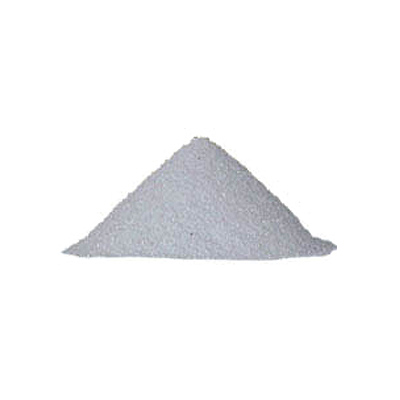
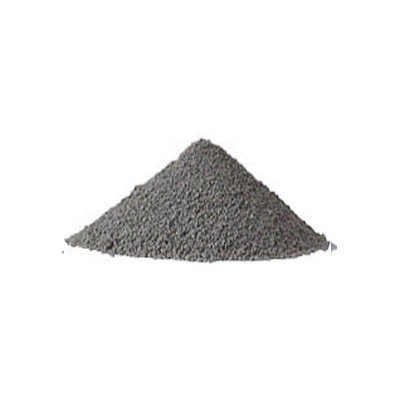
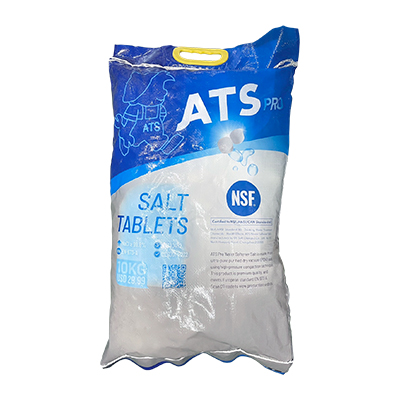
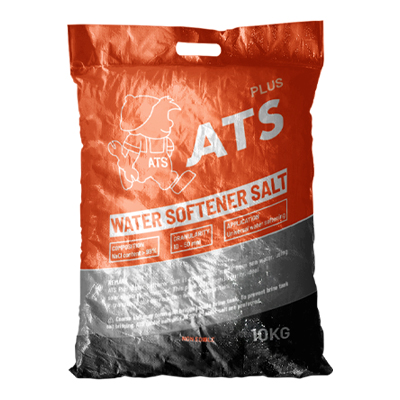
ATS water softener salt (SGS certified) Salt brick type

Product Information

ATS water softener salt (SGS certified) Salt brick type

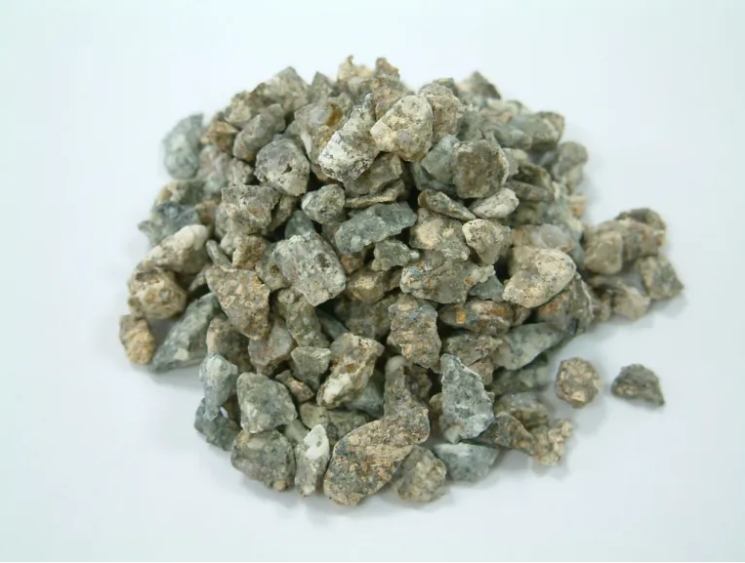
The water softener uses coarse salt for regeneration. Due to low purity, high impurities and uneven particle size, it is easy to contaminate the resin and block the automatic control valve. The special salt for softening has an appropriate particle size and will not precipitate on the bottom of the tank to form a salt bridge. It is specially designed for softening resin regeneration.

Generally, most water softeners use dried salt. Due to low purity, high impurities and uneven particle size, it is easy to contaminate the resin and block the automatic control valve.


Due to the small particle size of household refined salt, it is easy to pass through the micropores in the salt storage area and precipitate to the bottom of the barrel, resulting in a salt bridge phenomenon, so that the refined salt cannot be dissolved in water to make salt water, so that the resin cannot be regenerated, and softened water cannot be obtained.


Generally, the sodium chloride of sun-dried salt is about 94%, and the impurity rate is about 2%, which is easy to reduce the saturation concentration and reduce the regeneration efficiency.


The operation of the control valve and the use of special salt for softening can make the system reach a perfect state, and reduce the amount of salt, save salt consumption and maintenance costs, and indirectly save a lot of money. Salt is as important to a water softener as gasoline is to a car. How to choose a suitable and professional salt is very important.


Technical teaching:

下載 PDF

The water softener uses coarse salt for regeneration. Due to low purity, high impurities and uneven particle size, it is easy to contaminate the resin and block the automatic control valve. The special salt for softening has an appropriate particle size and will not precipitate on the bottom of the tank to form a salt bridge. It is specially designed for softening resin regeneration. Technical explanation

use Salt requirements for recommended softening systems
Softening system for medical use Use high-purity evaporated crystal salts
Softening system for food Impurities should be less than 1%
Softening system for drinking water Appropriate particle size, will not precipitate on the bottom of the tank to form a salt bridge
The only compliant and professional salt for regeneration characteristic
Sodium chloride: above 97% Salt dissolves in water to form brine
Impurity: less than 1% Salt water is a cleaning agent for resins and is formulated in
Moisture content: below 3% In the salt storage area of the salt tank
Particle size: more than 3mm Special salt designed for softening resin regeneration
Packing: PE bag 25kg/bag, ±3%
Compliant with food processing requirements

Softened salt tablets vs. table salt/coarse salt: What are the differences? What happens if you use the wrong one?

To state the conclusion in one sentence

The biggest problem with water softeners isn't that the water isn't salty enough, but rather that it's not clean enough, the water isn't stable, and there are too many impurities..
Therefore, it is usually used in daily life.Prioritize "softening salt tablets/salt pellets/salt granules" or high-purity salt clearly labeled as suitable for water softeners.Pouring **table salt/coarse salt (rock salt, some sea salt)** into the tank might make it run in the short term, but it easily leads to a cycle of "cleaning, clogging, and incomplete regeneration," ultimately costing more money and time.


First, understand: what does a water softener really need?

The core of a water softener is ion exchange resin, which is "regenerated" using concentrated brine.

It actually cares about very practical things, mainly two things:

  1. The saline solution should be able to be stably concentrated.Only with a stable concentration can resin regeneration be clean and hardness reduced.
  2. The salt water must be clean enough.With fewer impurities, the salt tank, salt suction path, valve body orifice, and seals will not be blocked or worn.

You can think of salt as the "filter material in a coffee machine": using the wrong one won't necessarily break it immediately, but it will start to cause problems soon.Stuck, blocked, strange smellThe same logic applies to water softeners.


What are the differences between the three types of salt? (Why are softened salt tablets usually the most stable?)

Let's first lay out the "differences" that you care about most in the table below:

Types (Title + Link) Typical features Common impacts on water softeners Who is it suitable for?
Softened salt tablets/salt pellets Most are high-purity, large-particle, or compressed into shape, and their dissolution behavior is relatively predictable. Less residue, less prone to salt mud/cakingMaintenance pressure is usually the lowest. For those who want convenience, require precise control valves, or live in humid environments
Table salt Common additives include "iodized" and anti-caking agents; fine particles Fine powder is easier to formAgglomeration/Poor dissolutionAdditives and powders may also increase clogging and cleaning frequency. Not recommendedUnless it's a short-term emergency and it's confirmed to be "additive-free and anti-caking".
Rock salt / Halite The refining process is relatively slow, and insoluble impurities are common. Impurity deposition →Clean the tank more frequentlyThis may also cause orifice blockage and increase the risk of seal wear. Budget-conscious individuals who are willing to increase maintenance frequency (but this is not recommended for many models).

Adding a common misconception:
"Softening salt tablets" are not magical; they are still mainly sodium chloride. The difference lies in their purity, particle/forming method, and dissolution behavior, which are more in line with the needs of water softeners.
Some brands also consider "evaporated salt" as one of the cleaner, less residue-free options; for example, this direction is often seen in Culligan's salt selection advice.


What happens if you use it incorrectly? The most common problem isn't the resin breaking, but rather the salt container failing first.

The disaster of using the wrong salt is often not an immediate explosion, but a slow dragging you into a repair hell. There are two most common scenarios:

  • Salt BridgeIt looks like there's a lot of salt on top, but the bottom is actually hollow; the salt hasn't soaked into the water.
  • Salt mushingThe bottom of the bucket turns into a muddy salt that resembles wet cement, making the salt absorption path easily blocked.

You can use this "On-site Interpretation Checklist" for quick reference:

question What you will see What are the consequences? On-site rapid handling
Salt Bridge The surface is hard; if you poke it with a stick, it's hollow underneath. The saline concentration is not high enough → Incomplete regeneration → Water hardness rebounds Break the bridge and remove the hard shell; adjust the amount of salt and moisture protection.
Salt mud A clump of mud at the bottom of the bucket makes it difficult to stir, slows down salt absorption, or prevents salt absorption altogether. Salt absorption path blocked → Regeneration failure → Soft water turns back into hard water Remove the mud and rinse away the sediment at the bottom of the bucket; replace it with high-purity salt ingots.

Many user guides or FAQs from home appliance/water brands list "salt bridges" as a common problem, such as GE Appliances; and "salt mud" is also frequently mentioned in the descriptions of salt brands, such as Diamond Crystal Salt, whose information is often cited as a problem description.


So which one should I buy? (30-second selection method)

If you only want the most practical answers, just look at this:

Your situation Recommended choice Why
Want the easiest and least cleaning method? Softened salt tablets/salt pellets With stable dissolution behavior and minimal residue, it's the least likely to drag you into the "tank cleaning cycle".
The area is damp, and the salt often clumps together. Soften salt tablets/salt pellets + add salt in small amounts frequently. Moisture protection and reduced chance of salt bridge formation make it more cost-effective than replacing the machine.
Only consider the unit price and be able to accept maintenance. (Not recommended, but some people used it on site) Coarse salt/rock salt The high probability of impurities and sediment increases both the risk of tank cleaning and the risk of malfunctions.
Really a temporary salt shortage Confirmed high-purity salt with "no additives and no anti-caking". To minimize the risks associated with "additives/fine powders," revert to using salt tablets after the initial use.

In addition, some well water/groundwater users in certain areas refer to local government water use FAQs to select salts (such as the Frequently Asked Questions for Lake County type wells); and the user manuals/installation manuals of equipment often directly prefer "tablet/pellet" type salts, such as the similar recommendations often seen in Tapworks user documentation.


What if you need low sodium? You can use potassium chloride, but it depends on the water quality and the model of the machine.

Due to sodium intake considerations, some people switch to potassium chloride as the regeneration medium; some salt suppliers (such as Cargill) also provide FAQs and usage recommendations for water treatment salts.

However, three practical points should be noted:

  • Regeneration efficiency and dissolution characteristics may differ.Do not copy the settings and dosages from NaCl.
  • If the raw water contains iron/manganese or is prone to cloggingIt's also important to consult the manual for recommendations to avoid accelerating the accumulation of problems.
  • Refer to your control valve/model manual.For example, manuals from brands like AO Smith often provide more conservative conditions for using salt/maintenance.

What to do if you've already used it incorrectly? (Three steps you can do without disassembling the device)

  1. First, determine whether it is a salt bridge or salt mud.Use a clean stick to poke downwards; a hard shell plus a hollow bottom equals a salt bridge; a muddy bottom equals salt mud.
  2. Remove unwanted salt and depositsRemove any clumps/salt mud and rinse away any sediment at the bottom of the bucket (usually more effective than you think).
  3. Switch back to softened salt tablets, and measure the hardness again after completing one regeneration cycle.The decrease in hardness indicates you've identified the core issue; if it remains too hard, check the brine system, settings, and changes in the raw water.

A small bonus: 3 habits that make salt easier to use and machines more convenient.

  • Don't add too much at onceSmall, frequent applications are less likely to cause serious damage than "filling up to the top of your head" (a common practice in China).
  • Keep dryKeep the salt container tightly closed and ensure good ventilation; dampness accelerates clumping.
  • Fixed view of the bottom of the bucketClean up any sediment you see; don't wait until salt absorption fails before taking action.

Want to end the "salt problem" once and for all?

If you are evaluating a more stable and easier-to-maintain water softening solution, you can also take a look at ATS related products and application configurations.

Related Products